



We understand how voltage drop can make illuminated sign fabrication difficult, especially on longer LED runs where the modules on one end of the sign end up noticeably dimmer than the other. Before you chase a callback or over-build the next job just to be safe, it helps to know exactly what's driving it. Grimco stocks the constant current modules, 24-volt systems, and wire gauge options sign fabricators need to build voltage drop out of a job from the start. So, what actually fixes voltage drop, and how do you build it into your process instead of troubleshooting it after install? Here's the recipe for eliminating voltage drop, built around module type, system voltage, and wire gauge.
3 Simple Rules to Eliminate Voltage Drop:
Rule #1: Use Constant Current Modules
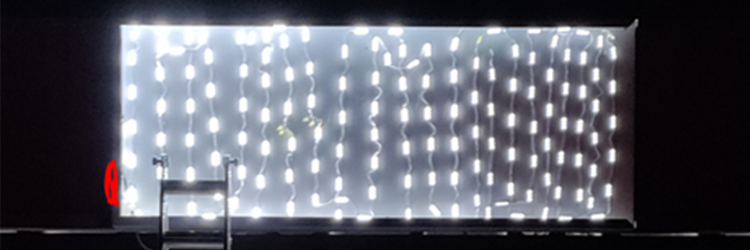
Example of light degradation caused by voltage drop. Notice how the modules on the left side of the sign appear much brighter than the LEDs on the right.
Consider using a constant current module. Constant current modules boost the current in your LED chain as voltage naturally drops off across a run, which keeps brightness more consistent from one end of the sign to the other. They also help you prevent and catch mistakes because of their versatility. Longer cascade runs are more forgiving, which lowers the odds of your production team overlooking a wiring spec that would keep the sign from performing the way it's supposed to.
Shop All Constant Current Modules
Rule #2: Use 24 Volt Modules
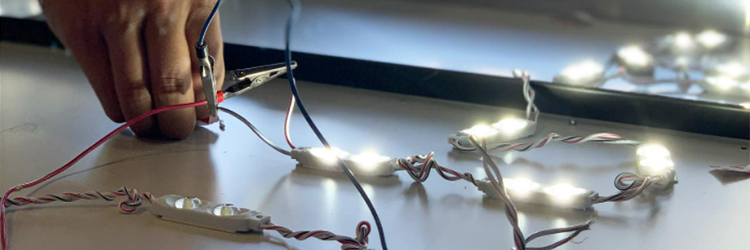
Myth: 24volt systems allow you to run more modules on a power supply.
Fact: 24 volt systems carry the current a greater distance before getting line loss or voltage drop.
If all specs are equal, moving from a 12v to a 24v system doesn't let you run more modules on a single power supply. A 24v system supports the same number of LEDs as a 12v system, but it can cascade more LEDs in series off the end of that run. So when you've got a long series of LEDs, or your power supply has to sit farther away from the first module than you'd like, a 24-volt system carries the current further. That also means you're not stuck spending more on thicker gauge wire or more time splicing runs of modules together just to get power where it needs to go.
As a general rule of thumb in the industry, 24-volt modules often support roughly double the series run length of a comparable 12-volt module before current drop sets in; though manufacturers document this differently, so the spec sheet for the specific module is the source of truth.
For more details on 12 vs. 24 Volt, check out this article 12 vs. 24 Volt LEDs: Which are Better?
Shop All 24-volt Power Supplies
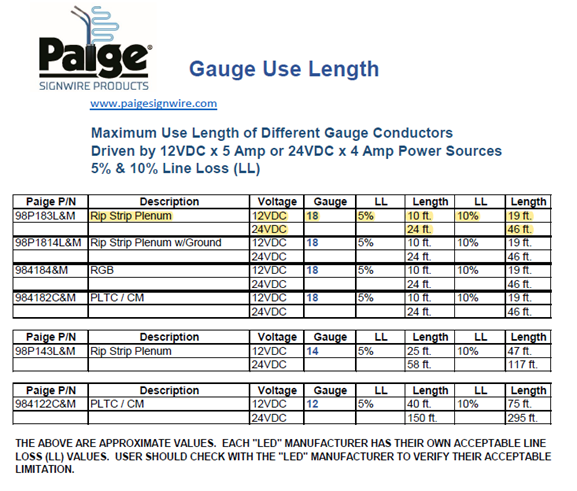
Rule #3: Follow Wire Gauge MAX Length Recommendations
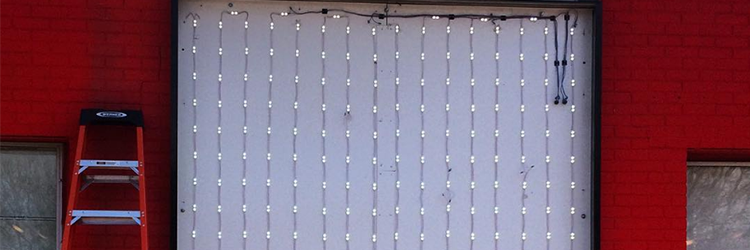
Most LEDs can operate on a little less than their spec'd voltage, but they won't produce the brightness they're rated for. Sometimes even the thickest wire gauge on hand still won't carry your voltage far enough. That's why following gauge-and-length guidelines matters just as much as module and voltage choice. Running a 24-volt system also lets you remote-mount your power supply farther from the sign without upgrading to a heavier gauge wire, which saves you both time and money. Follow the guidelines below and voltage drop becomes a non-issue.